
Introduction: The Eternal Fabric Dilemma
Every evening wear designer faces the same pivotal question: silk or viscose? While silk has reigned as the undisputed queen of luxury fabrics for millennia, viscose—often called “artificial silk”—has emerged as a compelling alternative that’s reshaping the formal wear landscape. With 2026’s evening wear trends emphasizing both opulence and sustainability, understanding the nuanced differences between these two fabrics has never been more critical.
This comprehensive guide dissects every aspect of silk versus viscose for evening wear, from performance metrics and cost analysis to draping characteristics and environmental impact. Whether you’re designing a flowing bias-cut gown, a structured mermaid silhouette, or an ethereal chiffon overlay, this comparison will equip you with the data-driven insights needed to make informed fabric selections that balance aesthetics, budget, and brand values.
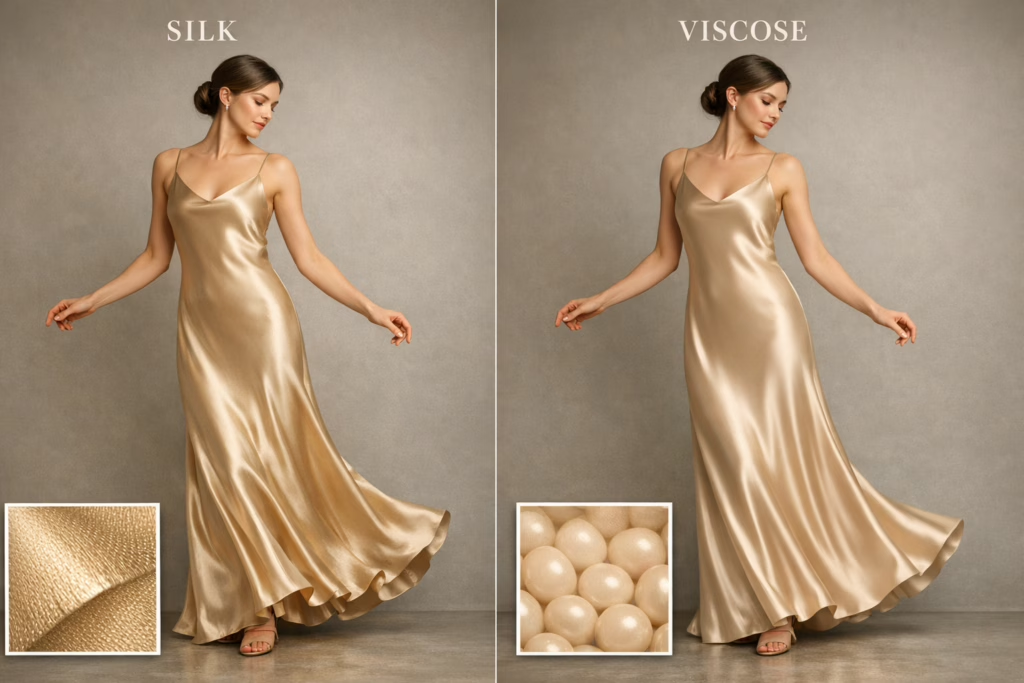
Understanding the Fabrics: Origins and Composition
Silk: Nature’s Luxury Fiber
Silk is a natural protein fiber meticulously produced by silkworms (Bombyx mori) during their cocoon-spinning process. Each cocoon yields approximately 1,000 yards of continuous silk filament, which is carefully unwound, cleaned, and woven into fabric. This labor-intensive process, kept secret for over a millennium in ancient China, produces one of the strongest natural fibers known—pound for pound stronger than steel.
Key Characteristics:
- Composition: 100% natural protein fiber (primarily fibroin)
- Production: From silkworm cocoons through sericulture
- Popular weaves for evening wear: Charmeuse, chiffon, crêpe de chine, silk satin, velvet
- Unique properties: Temperature-regulating, naturally hypoallergenic, high tensile strength
Viscose: The Engineered Alternative
Viscose rayon, developed in 1883 as an affordable silk alternative, is a semi-synthetic fiber derived from natural cellulose—typically wood pulp from beech, pine, or bamboo trees. Through a chemical process involving sodium hydroxide and carbon disulfide, the cellulose is dissolved into a viscous liquid, then extruded through spinnerets and solidified in sulfuric acid to create continuous filaments.
Key Characteristics:
- Composition: Regenerated cellulose fiber (semi-synthetic)
- Production: Chemical processing of wood pulp
- Popular types for evening wear: Viscose satin, viscose crepe, viscose velvet, modal, Tencel
- Unique properties: Excellent dye absorption, soft hand feel, versatile drape

Performance Comparison: The Data Designers Need
Comprehensive Performance Matrix
| Performance Metric | Silk | Viscose | Winner |
|---|---|---|---|
| Tensile Strength (dry) | 30-50 g/denier | 20-30 g/denier | Silk |
| Tensile Strength (wet) | Maintains 85% | Drops to 50% | Silk |
| Drape Coefficient | 0.7-0.9 (excellent) | 0.75-0.95 (excellent) | Tie |
| Moisture Absorption | 11% | 11-13% | Viscose |
| Wrinkle Resistance | Excellent | Poor to Fair | Silk |
| Elasticity/Recovery | 8-10% stretch | 2-3% stretch | Silk |
| Breathability | Excellent | Excellent | Tie |
| Durability (years) | 10-15+ with care | 5-8 | Silk |
| Color Retention | Very Good | Excellent | Viscose |
| Abrasion Resistance | Moderate | Low | Silk |
| Heat Sensitivity | Moderate (yellows >150°C) | High (degrades >100°C) | Silk |
| UV Resistance | Moderate (degrades over time) | Low (degrades faster) | Silk |
| Pilling Tendency | Low | Moderate | Silk |
| Static Electricity | Low (natural anti-static) | Moderate | Silk |
Key Performance Insights:
Silk’s Advantages:
- Superior strength retention when wet—critical for garments that may encounter humidity or perspiration
- Exceptional wrinkle resistance allows garments to maintain crisp appearance throughout events
- Natural elasticity provides comfort and shape retention
- Longevity makes it cost-effective per wear for investment pieces
Viscose’s Advantages:
- Superior dye uptake produces richer, more vibrant colors
- Comparable moisture absorption keeps wearers comfortable
- Excellent drape rivals or exceeds silk in fluid silhouettes
- More forgiving for first-time sewers due to stable weave
Drape and Movement Analysis
Both fabrics excel in creating the fluid, romantic silhouettes that define 2026 evening wear trends, but their draping characteristics differ subtly:
Silk Drape Profile:
- Weight Range: 12-30 momme (mm) for evening wear, with 16-19mm ideal for flowing gowns
- Movement Quality: Natural bounce and recovery; fabric “floats” with controlled movement
- Bias Behavior: Excellent bias drape for slip dresses and bias-cut gowns; minimal stretching over time
- Ideal Applications: Cowl necklines, Grecian draping, fluid A-lines, bias-cut designs
Viscose Drape Profile:
- Weight Range: 90-200 GSM for evening wear, with 120-150 GSM most popular
- Movement Quality: Softer, more liquid flow; “melts” against the body with less structural memory
- Bias Behavior: Excellent initial drape but prone to stretching and warping over time
- Ideal Applications: Wrap dresses, slip dresses, gathered skirts, soft pleating
Designer Tip: For structured bodices requiring shape retention, silk charmeuse or dupioni provides superior support. For unstructured, body-skimming designs where maximum fluid movement is desired, viscose crepe or satin excels.
Cost Analysis: Investment vs. Accessibility
Raw Material and Production Costs
Understanding the price differential between silk and viscose requires examining the entire supply chain:
Silk Cost Breakdown (per yard/meter):
- Raw Material: Charmeuse (19mm): $28-45 per yard | Chiffon: $18-35 per yard | Crêpe de chine: $25-40 per yard
- Production Factors: Labor-intensive sericulture, seasonal harvests, limited global supply (China produces 80%)
- Total Garment Impact: Evening gown requiring 5-7 yards: $140-315 in fabric costs alone
Viscose Cost Breakdown (per yard/meter):
- Raw Material: Viscose satin: $8-18 per yard | Viscose crepe: $10-15 per yard | Modal blend: $12-20 per yard
- Production Factors: Scalable industrial production, year-round manufacturing, abundant raw materials
- Total Garment Impact: Evening gown requiring 5-7 yards: $40-126 in fabric costs alone
Price Comparison Summary:
| Garment Type | Silk Cost | Viscose Cost | Savings | Price Ratio |
|---|---|---|---|---|
| Slip Dress (2.5 yards) | $70-112 | $20-45 | $50-67 | 2.5-3x |
| A-Line Gown (6 yards) | $168-270 | $48-108 | $120-162 | 2.5-3.5x |
| Ball Gown (12 yards) | $336-540 | $96-216 | $240-324 | 3.5x |
| Chiffon Overlay (4 yards) | $72-140 | $32-72 | $40-68 | 2-2.25x |
Market Positioning Strategy
Silk Evening Wear:
- Retail Price Points: $800-3,500+ for designer pieces; $300-800 for contemporary brands
- Target Demographics: Luxury consumers, special occasion buyers, investment dressing advocates
- Brand Positioning: Premium, heirloom quality, timeless elegance
- Profit Margins: 60-75% typical for high-end evening wear
Viscose Evening Wear:
- Retail Price Points: $150-600 for designer; $50-200 for contemporary brands
- Target Demographics: Budget-conscious consumers, trend-focused buyers, fast fashion
- Brand Positioning: Accessible luxury, fashion-forward, value-oriented
- Profit Margins: 55-70% typical for mid-range evening wear
Designer Insight: Many successful evening wear brands employ a dual-fabric strategy: silk for signature pieces and VIP collections, viscose for entry-level offerings and trend-driven styles. This approach captures multiple market segments while maintaining brand prestige.
Care and Maintenance: The Hidden Cost Factor
Silk Care Requirements
Cleaning Methods:
- Professional dry cleaning: Recommended for structured garments and embellished pieces ($15-35 per cleaning)
- Hand washing: Acceptable for unlined, simple designs using pH-neutral detergent in cold water
- Machine washing: Not recommended except for prewashed “washable silk”
Storage Considerations:
- Must be stored in breathable garment bags (never plastic)
- Requires cedar or lavender sachets to prevent moth damage
- Should be hung on padded hangers to prevent shoulder stress
- Direct sunlight causes yellowing and fiber degradation
Durability Factors:
- Lifespan: 10-15+ years with proper care; vintage silk garments from the 1920s-40s remain wearable
- Common issues: Perspiration stains (protein-based, difficult to remove), water spotting, color fading from light exposure
- Repairability: High—can be professionally repaired, re-dyed, or repurposed
Viscose Care Requirements
Cleaning Methods:
- Dry cleaning: Safest option for evening wear ($12-28 per cleaning)
- Hand washing: Possible but risky due to wet-strength loss; requires extreme gentleness
- Machine washing: Generally not recommended for evening wear; may cause shrinkage (3-5%) and distortion
Storage Considerations:
- Should be hung on padded hangers or folded flat
- Less susceptible to moth damage than silk
- Can tolerate breathable garment bags or acid-free tissue paper
- UV exposure causes faster degradation than silk
Durability Factors:
- Lifespan: 5-8 years with careful wear; loses structural integrity faster than silk
- Common issues: Permanent wrinkling, shrinkage, color fading, seam puckering, fiber weakening
- Repairability: Moderate—repairs possible but fabric degradation limits long-term restoration
Total Cost of Ownership (5-Year Projection)
Silk Evening Gown Scenario:
- Initial Investment: $1,200
- Cleaning (10 wears): $250 ($25 × 10)
- Minor Repairs: $75
- Storage Materials: $40
- Total 5-Year Cost: $1,565
- Cost Per Wear (25 wears): $62.60
- Resale Value: $300-600 (25-50% retention)
Viscose Evening Gown Scenario:
- Initial Investment: $350
- Cleaning (10 wears): $180 ($18 × 10)
- Minor Repairs: $50
- Storage Materials: $25
- Total 5-Year Cost: $605
- Cost Per Wear (20 wears): $30.25
- Resale Value: $35-70 (10-20% retention)
Designer Consideration: While viscose offers lower per-wear costs, silk’s superior longevity and resale value make it more economical for investment pieces expected to last decades. For trend-driven designs with limited wear potential, viscose provides better value alignment.
Sustainability Scorecard: Environmental Impact Analysis
As the fashion industry confronts its environmental footprint, fabric choice has become an ethical statement. Here’s how silk and viscose compare across key sustainability metrics:
Comprehensive Sustainability Assessment
| Sustainability Factor | Silk | Viscose (Conventional) | Viscose (Eco/Tencel) |
|---|---|---|---|
| Renewable Resource | ✓ Yes (silkworm farming) | ✓ Yes (wood pulp) | ✓ Yes (sustainably sourced) |
| Biodegradability | ✓ 100% (4 years) | ✓ 100% (8 weeks) | ✓ 100% (8 weeks) |
| Water Consumption | High (3,000L per kg) | Moderate-High (varies) | Low (closed-loop systems) |
| Chemical Use | Minimal (washing/degumming) | High (caustic soda, carbon disulfide) | Low (non-toxic NMMO solvent) |
| Chemical Recycling | ✗ Difficult | ✗ Difficult | ✓ 99% solvent recovery |
| Pesticide Use | Low (mulberry trees) | High (conventional forestry) | Minimal (FSC-certified forests) |
| Carbon Footprint | Moderate | Moderate-High | Low-Moderate |
| Labor Practices | Variable (artisanal to exploitative) | Variable (factory conditions) | Better (certified facilities) |
| Animal Welfare | ✗ Silkworms killed in process | ✓ N/A | ✓ N/A |
| Microplastic Shedding | ✓ None (natural fiber) | ✓ None (cellulosic) | ✓ None (cellulosic) |
| End-of-Life Options | Compost, textile recycling | Compost, limited recycling | Compost, increasing recycling |
| Certifications Available | GOTS (for organic silk) | OEKO-TEX, FSC | FSC, OEKO-TEX, EU Ecolabel |
Sustainability Score (out of 10):
- Traditional Silk: 6.5/10
- Conventional Viscose: 5/10
- Eco-Viscose (Tencel/Lyocell): 8/10
- Peace Silk (Ahimsa): 7.5/10
Environmental Impact Deep Dive
Silk’s Environmental Profile:
Positives:
- Natural, biodegradable fiber requiring no petrochemicals
- Mulberry sericulture provides carbon sequestration
- Long garment lifespan reduces replacement frequency
- Traditional production methods support artisan communities
- No microplastic pollution
Negatives:
- Water-intensive production (though less than conventional cotton)
- Silkworms are boiled alive in conventional silk production (ethical concern)
- Limited scalability—cannot meet fast fashion demand
- Some operations use harmful dyes and finishing chemicals
- Transportation emissions (80% produced in China)
Viscose’s Environmental Profile:
Positives (Conventional Viscose):
- Biodegradable cellulosic fiber
- Can utilize sustainably managed forests
- Lower cost enables clothing longevity through affordability
- No animal products (vegan-friendly)
Negatives (Conventional Viscose):
- Toxic chemical use (carbon disulfide causes health issues for workers)
- Contributes to deforestation when sourced from endangered forests
- Chemical-intensive manufacturing causes water pollution
- High water and energy consumption
- Some facilities have poor labor conditions
Positives (Eco-Viscose/Tencel/Lyocell):
- Closed-loop production recovers 99% of solvents
- Uses non-toxic NMMO solvent instead of carbon disulfide
- FSC-certified wood sources prevent deforestation
- Dramatically reduced water consumption
- EU Ecolabel certification available
- Supports circular economy initiatives
Sustainable Sourcing Recommendations
For Maximum Sustainability:
- Choose Eco-Viscose (Tencel/Lyocell): Look for FSC and EU Ecolabel certifications
- Select Peace Silk (Ahimsa): Allows silkworms to complete lifecycle before harvesting
- Verify Certifications: GOTS for organic silk, OEKO-TEX Standard 100 for both fabrics
- Consider Vintage/Deadstock: Utilizes existing materials, eliminating new production impact
- Design for Longevity: Create timeless pieces that transcend seasonal trends
- Implement Take-Back Programs: Enable garment recycling and circularity
Design Case Studies: When to Choose Which Fabric
Real-World Applications from 2026 Collections
Case Study 1: Bias-Cut Slip Dress
Design Requirements: Fluid drape, body-skimming fit, minimal structure, sensual movement
Fabric Selection: Silk Charmeuse (19mm)
Rationale:
- Superior bias stability prevents stretching and warping over time
- Natural weight creates elegant hang without clinging
- Wrinkle resistance maintains appearance throughout wear
- Investment piece positioning justifies premium cost
Alternative: Viscose crepe works for budget-friendly versions but requires frequent replacement due to bias stretch
Designer: Reformation’s bias-cut silk slip dresses (retail $398) versus viscose versions ($178) demonstrate this positioning strategy
Case Study 2: Voluminous Ball Gown
Design Requirements: Dramatic volume, structured bodice, flowing skirt, layered construction
Fabric Selection: Viscose Organza + Viscose Satin
Rationale:
- Viscose organza provides crisp volume at fraction of silk organza cost
- Multiple layers require significant yardage—viscose makes design economically viable
- Structured bodice can utilize interfacing for support regardless of fashion fabric
- Trend-driven design has shorter lifecycle, making lower cost appropriate
Alternative: Silk taffeta or organza for heirloom/bridal pieces where longevity is paramount
Designer: Viktor & Rolf’s sculptural evening gowns often utilize viscose-blend organzas for volume
Case Study 3: Draped Goddess Gown
Design Requirements: Grecian draping, cowl neckline, elegant folds, minimal seams
Fabric Selection: Silk Crêpe de Chine or Viscose Crepe
Rationale:
- Both fabrics excel in soft, controlled draping
- Silk provides superior longevity for rental or resale models
- Viscose offers accessibility for ready-to-wear lines
- Decision point: brand positioning and price architecture
Designer Hybrid Approach: Offer both options—silk for “Signature” collection ($1,200), viscose for “Studio” line ($395)
Designer: Halston Heritage successfully employs this dual-tier strategy
Case Study 4: Embellished Evening Jacket
Design Requirements: Structure, body, weight to support beading, repeated wear durability
Fabric Selection: Silk Dupioni or Heavy Silk Shantung
Rationale:
- Silk’s superior strength supports heavy embellishments without tearing
- Natural irregularity (slubs) adds visual texture enhancing hand-beading
- Structure requires fabric with body—viscose would be too soft
- Investment outerwear piece justifies silk selection
Alternative: Viscose-linen blend for unembellished structured jackets requiring crispness
Designer: Oscar de la Renta’s embellished evening jackets exclusively use silk for structural integrity
Case Study 5: Sustainable Collection Cocktail Dress
Design Requirements: Environmental credentials, transparent sourcing, accessible pricing, trend-relevance
Fabric Selection: Tencel (Lyocell) Satin
Rationale:
- FSC-certified, closed-loop production aligns with sustainability messaging
- Comparable luxury feel to silk at mid-tier pricing
- Excellent dye uptake for trend-driven color stories
- OEKO-TEX certification appeals to eco-conscious consumers
- Viscose family familiar to manufacturers—no production learning curve
Designer: Stella McCartney extensively uses Tencel in evening wear for sustainability positioning
Fabric Selection Decision Tree
Start Here: What’s your primary design objective?
→ Maximum Luxury & Longevity
- Choose: Silk (charmeuse, crêpe de chine, chiffon)
- Best for: Investment pieces, bridal, heirloom designs, rental collections
→ Trend-Driven & Accessible Pricing
- Choose: Viscose (satin, crepe, jersey)
- Best for: Fast fashion, seasonal collections, entry-level evening wear
→ Sustainability Positioning
- Choose: Tencel/Lyocell or Peace Silk
- Best for: Eco-conscious brands, transparent supply chains, vegan collections
→ Structured Garments with Embellishment
- Choose: Silk (dupioni, shantung, taffeta)
- Best for: Beaded bodices, embellished jackets, structured gowns
→ Maximum Volume & Drama
- Choose: Viscose (organza, taffeta, tulle)
- Best for: Ball gowns, statement pieces, theatrical designs
→ Bias-Cut/Minimal Seaming
- Choose: Silk (heavy charmeuse, satin-back crepe)
- Best for: Slip dresses, Grecian draping, body-conscious designs
2026 Evening Wear Trends: Fabric Implications
Understanding current trends helps inform fabric selection for commercially viable designs:
Trend 1: Sculpted Silhouettes with Ruching
Trend Description: Precision gathering creates flattering, body-contouring designs
Optimal Fabric: Silk charmeuse or viscose jersey
Reason: Requires fabric with recovery to maintain gathers; silk’s elasticity prevents permanent distortion
Trend 2: Sheer Layering and Illusion Effects
Trend Description: Ethereal overlays, sheer panels, devoré techniques
Optimal Fabric: Silk chiffon (luxury) or viscose georgette (accessible)
Reason: Both provide necessary transparency; silk offers better longevity for delicate applications
Trend 3: Sustainable Luxury
Trend Description: Eco-credentials without compromising aesthetics
Optimal Fabric: Tencel satin or peace silk
Reason: Certified sustainable options meeting luxury expectations
Trend 4: Metallic and High-Shine Finishes
Trend Description: Gold, silver, liquid metallics dominating 2026 palettes
Optimal Fabric: Silk or viscose satin (both accept metallic treatments well)
Reason: Viscose’s superior dye uptake creates richer metallic tones; silk offers luxury positioning
Trend 5: Velvet Renaissance
Trend Description: Plush, jewel-toned velvets for fall/winter evening wear
Optimal Fabric: Silk-rayon velvet blend or pure viscose velvet
Reason: Blends combine silk’s prestige with viscose’s affordability; pure viscose offers accessible luxury
The Verdict: Strategic Fabric Selection Framework
There is no universal “winner” in the silk versus viscose debate—only optimal choices based on specific design, business, and brand parameters.
Choose Silk When:
✓ Longevity is paramount (investment pieces, bridal, heirloom designs)
✓ Premium positioning justifies 2.5-3.5x cost premium
✓ Bias-cut or minimal seaming requires dimensional stability
✓ Embellishments need strong, supportive base fabric
✓ Wrinkle resistance is critical for travel or long events
✓ Natural fiber credentials align with brand values
✓ Resale/rental model benefits from durability
Choose Viscose When:
✓ Accessible pricing is essential to market positioning
✓ Trend-driven designs have shorter commercial lifecycle
✓ Volume and yardage requirements make silk cost-prohibitive
✓ Vibrant color saturation is design priority
✓ Vegan/animal-free credentials matter to target customer
✓ First-time evening wear sewers need forgiving fabric
✓ Quick turnaround production timelines leverage viscose availability
Choose Eco-Viscose (Tencel) When:
✓ Sustainability credentials are brand differentiator
✓ Mid-tier pricing ($200-600 retail) is sweet spot
✓ Transparent supply chain is marketing priority
✓ Comparable silk aesthetics needed without animal products
✓ Certifications (FSC, OEKO-TEX) add value to positioning
Conclusion: Informed Decisions for Better Designs
The silk versus viscose decision transcends simple fabric selection—it’s a strategic choice that impacts brand positioning, price architecture, target demographics, sustainability messaging, and long-term business success. Armed with comprehensive performance data, cost analysis, care requirements, and environmental impact assessments, designers can make informed choices that align fabric selection with overarching creative and commercial objectives.
For 2026’s evening wear landscape—where sustainable luxury, accessible elegance, and timeless investment pieces coexist—understanding the nuanced strengths and limitations of both silk and viscose empowers designers to create exceptional garments that resonate with their intended audience while maintaining operational viability.
The future of evening wear isn’t about choosing silk OR viscose—it’s about strategically deploying both within a thoughtfully curated collection that serves multiple market segments, honors brand values, and delivers genuine value to customers who trust you to guide their most important wardrobe choices.
Ready to Source Premium Evening Wear Fabrics?
Partner with Vaaritex-intl Fabrics for Your Fabric Needs
At Vaaritex International Ltd., we specialize in providing fashion designers and brands with premium silk and viscose fabrics specifically curated for evening wear applications. Our expertise bridges the gap between aesthetic vision and practical sourcing.
Why Designers Choose Vaaritex-intl Fabrics:
✓ Curated Selection: Both luxury silk and eco-viscose options in evening wear weights
✓ Quality Assurance: Pre-vetted suppliers, consistent dye lots, rigorous quality control
✓ Flexible MOQs: Sample yardage to production runs—we scale with your needs
✓ Technical Support: Fabric recommendations based on your specific design requirements
✓ Sustainability Guidance: Certified eco-options (GOTS silk, FSC Tencel) with transparency
✓ Competitive Pricing: Direct mill relationships ensure optimal value
✓ Fast Shipping: Global logistics infrastructure for timely delivery
Take the Next Step
📦 Order Fabric Swatches
Experience the difference in hand feel, drape, and quality. Request our Evening Wear Fabric Sample Set featuring:
- Silk charmeuse (16mm, 19mm, 22mm weights)
- Silk chiffon (3.5mm, 6mm)
- Silk crêpe de chine (14mm)
- Viscose satin (120 GSM, 140 GSM)
- Viscose crepe (110 GSM)
- Tencel satin (130 GSM)
Price: $45 (includes shipping) | Delivery: 5-7 business days worldwide
Frequently Asked Questions
Q: Can I mix silk and viscose in one garment?
A: Absolutely! Many designers use silk for bodices (structure, longevity) and viscose for skirts (volume, cost efficiency). Ensure compatible care requirements or design for removable components.
Q: Which fabric is better for plus-size evening wear?
A: Both can work beautifully. Silk charmeuse (19mm+) provides structure without clinging; viscose jersey offers comfortable stretch. Consider bias-cut silk for body-skimming designs, structured viscose satin for defined silhouettes.
Q: How do I prevent viscose from stretching out?
A: Choose heavier weights (140+ GSM), incorporate lining for stability, avoid bias cuts, and use stay tape in stress areas (shoulders, waistbands). Proper pressing with starch can temporarily improve stability.
Q: Is silk suitable for warm-climate evening events?
A: Yes—silk is naturally temperature-regulating and breathable. Choose lighter weights (12-16mm charmeuse, 3.5mm chiffon) and light colors. Viscose is equally breathable but may feel more clingy in humidity.
Q: Can I machine-wash evening wear silk or viscose?
A: Not recommended for evening wear. Both fabrics risk shrinkage, color bleeding, and structural damage. Professional dry cleaning or expert hand-washing preserves garment integrity.
Q: Which fabric photographs better?
A: Silk’s natural luster photographs beautifully but can create “hot spots” under harsh lighting. Viscose’s more uniform sheen photographs consistently. Both work well with proper lighting techniques.
Q: How do I choose between silk chiffon and viscose georgette?
A: Silk chiffon: slightly crisper, better recovery, luxury positioning. Viscose georgette: softer drape, more matte, budget-friendly. Both create beautiful overlays—choose based on budget and brand positioning.
Related Resources
External Resources: