
Introduction: The Growing Demand for GOTS Organic Cotton
The organic cotton market is experiencing unprecedented growth, projected to expand from $4.3 billion in 2023 to $8.7 billion by 2033 at a 7.0% CAGR. For wholesalers, brands, and manufacturers navigating this booming sector, understanding GOTS (Global Organic Textile Standard) certification is no longer optional—it’s essential for market access, consumer trust, and competitive positioning.
This comprehensive guide provides everything you need to know about sourcing GOTS organic cotton wholesale, from certification requirements and technical specifications to pricing analysis, minimum order quantities, supplier selection criteria, and quality assurance protocols. Whether you’re a fashion brand launching a sustainable line, a textile manufacturer expanding your organic offerings, or a wholesale buyer seeking certified suppliers, this resource delivers actionable insights for informed sourcing decisions in 2026.
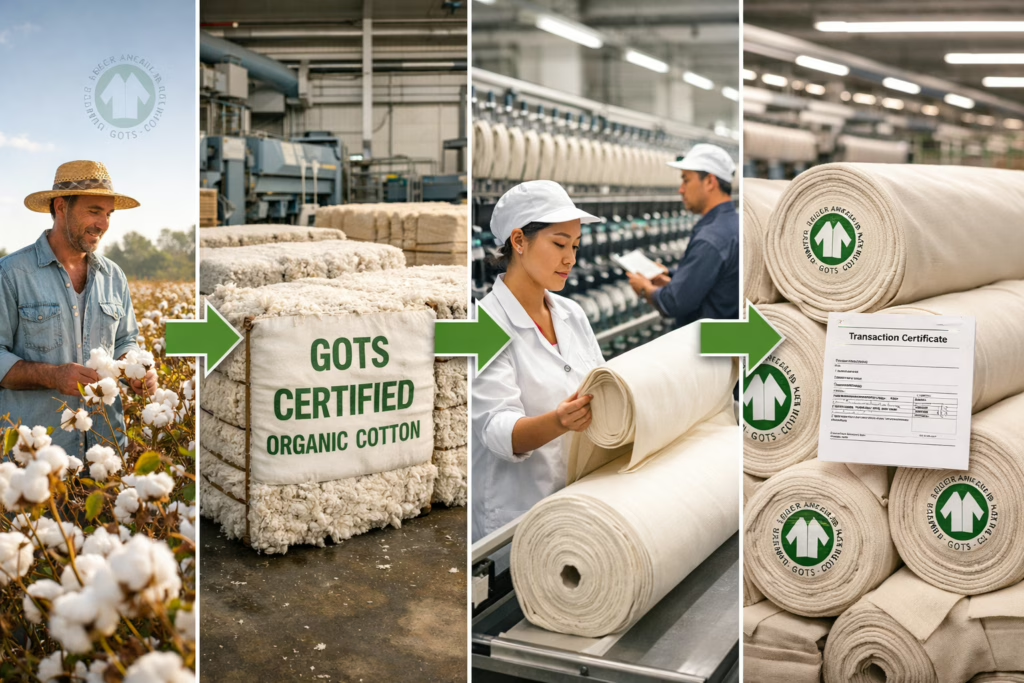
What is GOTS Certification? Understanding the Gold Standard
GOTS: The Global Authority for Organic Textiles
The Global Organic Textile Standard (GOTS) is the worldwide leading textile processing standard for organic fibers, established in 2006 through collaboration between four founding members: Organic Trade Association (USA), International Association Natural Textile Industry (Germany), Soil Association (UK), and Japan Organic Cotton Association. GOTS provides a comprehensive framework covering environmental, social, and quality criteria throughout the entire textile supply chain.
Key Distinguishing Features:
✓ Holistic Supply Chain Coverage: Unlike certifications that focus solely on raw material (like OCS – Organic Content Standard) or chemical safety (like OEKO-TEX), GOTS certifies the entire production process from ginning through manufacturing, packaging, labeling, and distribution.
✓ Dual Certification Categories:
- GOTS “Organic” (Grade 1): Products containing minimum 95% certified organic fibers
- GOTS “Made with Organic” (Grade 2): Products containing minimum 70% certified organic fibers (remaining 30% can be non-organic natural or synthetic fibers under strict restrictions)
✓ Environmental AND Social Criteria: GOTS mandates both ecological responsibility (water treatment, chemical restrictions, energy efficiency) and labor standards (based on ILO conventions, prohibiting forced labor, child labor, discrimination, and requiring safe working conditions).
✓ Third-Party Verification: All processors, manufacturers, and traders in the supply chain must be independently certified by GOTS-approved certification bodies (over 20 accredited globally including Control Union, Ecocert, IMO, and others).
What GOTS Certification Covers
Organic Fiber Production (Farming):
While GOTS itself doesn’t certify farms (this falls under organic farming standards like USDA Organic, EU Organic, IFOAM Family Standards), GOTS requires that raw materials come from certified organic sources. Organic cotton must be grown without:
- Synthetic pesticides or fertilizers
- Genetically Modified Organisms (GMOs)
- Chemical defoliants for harvest
Processing Stages (GOTS Certified):
- Ginning: First processing stage removing seeds from cotton bolls
- Spinning: Conversion of fiber to yarn
- Weaving/Knitting: Fabric production
- Wet Processing: Dyeing, printing, finishing
- Cut & Sew: Garment manufacturing
- Packaging & Labeling: Final product preparation
- Trading: All intermediaries handling GOTS goods
Chemical Management:
GOTS maintains a restricted substance list (RSL) prohibiting or limiting:
- Heavy metals (lead, cadmium, chromium VI)
- Formaldehyde
- Aromatic solvents
- Functional nanoparticles
- Genetically modified enzymes
- Chlorine bleaching (replaced with hydrogen peroxide or oxygen bleaching)
- Azo dyes that release carcinogenic amines
Environmental Requirements:
- Wastewater treatment with specific pH, temperature, and contaminant limits
- Energy and water efficiency measures
- Waste management protocols
- Proper storage and handling of chemicals
Social Compliance:
- No forced or bonded labor
- No child labor (minimum age 15, or 14 in developing countries per ILO Convention 138)
- Freedom of association and collective bargaining rights
- No discrimination (gender, race, religion, etc.)
- Safe and hygienic working conditions
- Living wages and reasonable working hours
- Clear employment terms

GOTS Organic Cotton Specifications: Technical Parameters
Fiber Quality Standards
Staple Length Classification:
| Grade | Staple Length | Common Applications |
|---|---|---|
| Short Staple | < 1 1/16 inch (27mm) | Coarse yarns, industrial fabrics |
| Medium Staple | 1 1/32 – 1 3/32 inch (26-28mm) | Standard apparel, home textiles |
| Long Staple | 1 1/8 – 1 3/8 inch (29-35mm) | Fine yarns, premium apparel |
| Extra-Long Staple (ELS) | > 1 3/8 inch (35mm+) | Luxury textiles, high thread count |
Note: GOTS certification doesn’t mandate specific staple lengths, but buyers should specify requirements based on end-use. Organic Pima and Egyptian varieties fall into ELS category.
Fiber Characteristics:
Micronaire (Fiber Fineness/Maturity):
- Premium: 3.5-4.9 (ideal for spinning fine yarns)
- Standard: 3.0-3.4 or 5.0-5.2 (acceptable for most applications)
- Discount: <3.0 or >5.2 (difficult to process, lower yarn strength)
Strength:
- Measured in grams per tex (g/tex)
- Typical organic cotton: 27-32 g/tex
- Higher values indicate better yarn strength and durability
Uniformity Index:
- Measures length consistency
- Preferred: >80% (more consistent spinning performance)
- Acceptable: 75-80%
Color Grade:
- White: Preferred (easiest to dye consistently)
- Light Spotted: Acceptable for most uses
- Spotted/Tinged: May require bleaching (must use GOTS-approved oxygen bleach)
Trash Content:
- Leaf grade measures foreign matter
- Premium: Grade 1-2 (minimal trash)
- Standard: Grade 3-4
- High trash content increases processing costs
Fabric Specifications
Common GOTS Organic Cotton Fabric Constructions:
Woven Fabrics:
| Fabric Type | Weight Range | Thread Count | Typical Uses |
|---|---|---|---|
| Poplin/Broadcloth | 80-120 GSM | 80-120 | Shirts, blouses, lightweight dresses |
| Oxford | 100-150 GSM | 60-100 | Business shirts, casual wear |
| Twill | 150-250 GSM | 80-150 | Pants, jackets, workwear |
| Canvas/Duck | 250-400+ GSM | 40-80 | Bags, upholstery, heavy-duty items |
| Voile | 60-90 GSM | 80-120 | Scarves, lightweight curtains |
| Denim | 280-450 GSM | 60-120 | Jeans, jackets, structured apparel |
Knit Fabrics:
| Fabric Type | Weight Range | Gauge | Typical Uses |
|---|---|---|---|
| Single Jersey | 140-180 GSM | 20-28 | T-shirts, underwear |
| Interlock | 180-240 GSM | 18-24 | Children’s wear, underwear |
| French Terry | 200-280 GSM | 16-22 | Sweatshirts, loungewear |
| Fleece | 250-350+ GSM | 14-20 | Hoodies, blankets |
| Rib Knit | 180-260 GSM | 18-24 | Cuffs, collars, fitted garments |
Yarn Count Specifications:
- Ne (English Count): Finer fabrics use higher counts (40s, 60s, 80s)
- 20s-30s: Standard T-shirts, casual wear
- 40s-60s: Premium apparel, dress shirts
- 80s-100s: Luxury textiles, high-end garments
- Tex (Linear Density): Lower tex = finer yarn
Shrinkage:
GOTS fabrics should be pre-shrunk or communicate expected shrinkage:
- Standard allowance: 3-5% length, 2-3% width
- Premium/pre-shrunk: <2% both directions
Colorfastness (GOTS Requirements):
- Washing: Grade 3-4 minimum
- Rubbing (dry): Grade 4 minimum
- Rubbing (wet): Grade 2-3 minimum
- Light: Grade 4 minimum (for light colors)
- Perspiration: Grade 3-4 minimum
Pricing Analysis: What to Expect for GOTS Organic Cotton
Current Market Pricing (2026 Data)
Raw Organic Cotton Fiber:
Conventional vs. Organic Price Premium:
- Conventional Cotton: $0.60-0.65 per pound (60-65 cents/lb as of January 2026)
- Organic Cotton Fiber: $0.85-1.10 per pound
- Price Premium: 20-40% higher than conventional (varies by grade, origin, market conditions)
Organic Cottonseed:
- Organic: $500-740 per ton
- Conventional: $275-460 per ton
- Premium: 60-80% higher for organic
Regional Price Variations:
- India (largest organic producer): Generally lowest prices ($0.80-0.95/lb fiber)
- Turkey: Mid-range ($0.90-1.05/lb)
- USA (Texas, California): Premium pricing ($1.00-1.20/lb)
- China, Kyrgyzstan, Tanzania: Varies $0.85-1.00/lb
GOTS Certified Fabric Wholesale Pricing:
Per Yard/Meter Pricing (Minimum order 1,000+ yards):
| Fabric Type | Weight | Price Range ($/yard) | Price Range ($/meter) |
|---|---|---|---|
| Woven Fabrics | |||
| Poplin/Broadcloth | 100 GSM | $4.50-6.50 | $4.90-7.10 |
| Oxford | 120 GSM | $5.50-7.50 | $6.00-8.20 |
| Twill | 200 GSM | $7.00-10.00 | $7.65-10.95 |
| Canvas | 300 GSM | $9.00-13.00 | $9.85-14.20 |
| Denim | 350 GSM | $10.00-15.00 | $10.95-16.40 |
| Knit Fabrics | |||
| Single Jersey | 160 GSM | $8.00-11.00 | $8.75-12.05 |
| French Terry | 260 GSM | $11.00-15.00 | $12.05-16.40 |
| Fleece | 300 GSM | $13.00-18.00 | $14.20-19.70 |
Factors Affecting Price:
Certification Grade:
- GOTS “Organic” (95%+): Premium pricing
- GOTS “Made with Organic” (70-94%): 10-15% lower than full organic
Fiber Quality:
- Extra-Long Staple (Pima, Egyptian): 30-50% premium
- Long Staple: 15-25% premium
- Medium Staple: Baseline pricing
Color/Finish:
- Natural/Undyed: Lowest cost (no dyeing expenses)
- Dyed (single color): +$1.00-2.50/yard
- Printed: +$2.50-5.00/yard
- Special finishes (enzyme wash, garment dye): +$1.50-3.00/yard
Origin/Transparency:
- Fully traceable supply chain: 10-20% premium (growing demand for farm-to-fabric traceability)
- Standard GOTS: Baseline
- Additional certifications (Fair Trade, B Corp): +5-15%
Order Volume:
- 1,000-2,500 yards: Baseline pricing above
- 2,500-5,000 yards: 5-10% discount
- 5,000-10,000 yards: 10-15% discount
- 10,000+ yards: 15-25% discount (negotiate directly)
Market Conditions:
- Harvest yields (drought, floods affect supply)
- Currency fluctuations (most traded in USD)
- Shipping costs (freight rates volatile)
- Demand surges (2026 seeing strong growth in sustainable fashion)
Price Comparison: GOTS vs. Conventional vs. Other Certifications:
| Fabric Type | Conventional | OCS | OEKO-TEX | GOTS | Price Difference |
|---|---|---|---|---|---|
| Poplin 100 GSM | $2.50-3.50 | $3.50-4.50 | $3.00-4.00 | $4.50-6.50 | GOTS +50-80% |
| Jersey 160 GSM | $5.00-7.00 | $6.50-8.50 | $5.50-7.50 | $8.00-11.00 | GOTS +40-60% |
Why GOTS Costs More:
- Organic farming (no synthetic inputs, lower yields)
- Certification fees (annual audits for all supply chain entities)
- Separate production lines (no cross-contamination)
- Approved chemical inputs (often more expensive)
- Social compliance (fair wages, safe conditions)
- Transaction certificate system (documentation overhead)
Minimum Order Quantities (MOQ): What Wholesalers Need to Know
Standard MOQ Parameters
Raw Fiber:
- Typical MOQ: 5-10 tons (approximately 22-44 bales, 480 lbs per bale)
- Premium grades/special origins: May require 10-20 tons
- Reasoning: Cotton gins and traders work with containerized shipments; smaller orders become cost-prohibitive
Fabric (Greige/Undyed):
- Woven fabrics: 1,000-3,000 yards/meters per color/construction
- Knit fabrics: 500-2,000 yards/meters (knits often have lower MOQs)
- Specialty constructions (complex weaves, blends): 2,500-5,000 yards minimum
Dyed/Finished Fabric:
- Solid colors: 1,500-3,000 yards per colorway
- Printed fabrics: 3,000-5,000 yards per design (printing setup costs)
- Custom colors (PMS matching): 2,000+ yards to justify dye lab development
Yarn:
- Carded yarn: 500-1,000 kg per count
- Combed yarn: 1,000-2,000 kg per count
- Specialty counts (80s+): 2,000+ kg
Why GOTS MOQs are Higher
Segregation Requirements:
- GOTS-certified facilities must maintain physical separation from conventional production
- Dedicated production runs prevent cross-contamination
- Machinery must be cleaned between organic and conventional runs
- Smaller batches don’t justify the setup and cleaning overhead
Certification Traceability:
- Each batch requires Transaction Certificate (TC) documentation
- Volume reconciliation between input and output
- Complex paperwork for small quantities becomes administratively burdensome
Economic Efficiency:
- Organic inputs cost 20-40% more; larger orders spread fixed costs
- Certification bodies charge per audit, not per kilogram
- Brands can better absorb premium pricing with volume commitments
Negotiating Lower MOQs
Strategies for Smaller Buyers:
- Join Group Buys: Partner with other brands or designers to meet collective minimums
- Stock Programs: Some suppliers maintain ready stock in popular weights/colors (typically natural, white, black) with lower MOQs (500-1,000 yards)
- Sample Yardage: Many suppliers offer 10-50 yard minimums for sampling at higher per-yard pricing (often 2-3x wholesale)
- Emerging Supplier Relationships: New or smaller GOTS mills may accept lower MOQs to build client base
- Fabric Agents/Importers: Work with agents who consolidate orders from multiple clients
- Seasonal Purchasing: Commit to annual volumes spread across multiple deliveries
MOQ Flexibility by Supplier Type:
| Supplier Type | Typical MOQ | Flexibility | Best For |
|---|---|---|---|
| Large Mills (Integrated) | 3,000-5,000 yards | Low | Established brands, large orders |
| Medium Mills | 1,500-3,000 yards | Moderate | Growing brands, seasonal orders |
| Small/Artisan Mills | 500-1,500 yards | High | Designers, small brands, specialty |
| Fabric Agents/Importers | 500-1,000 yards | Moderate-High | First-time buyers, testing market |
| Stock Service Providers | 50-500 yards | Very High (premium pricing) | Sampling, small runs |
Supplier Selection Standards: Choosing the Right GOTS Partner
Essential Certification Verification
Step 1: Verify Current GOTS Certification
✓ Request Scope Certificate: Suppliers must provide current GOTS certificate showing:
- License number
- Certification body name
- Validity dates (annual renewal required)
- Scope of certification (which processing stages)
- Product categories covered
- Facility addresses
✓ Check GOTS Online Database: Visit global-standard.org/public-database
- Search by company name, location, or license number
- Confirms active certification status
- Shows approved product categories
- Lists certified facilities globally
✓ Verify Certification Body Accreditation: Ensure the CB is GOTS-approved:
- Common approved CBs: Control Union, Ecocert, IMO, ICEA, OneCert, CERES, etc.
- Full list available on GOTS website
Step 2: Request Transaction Certificates (TCs)
For every GOTS purchase, suppliers MUST provide:
- Transaction Certificate (TC): Documents chain of custody from supplier to buyer
- TC Validity: Issued for each shipment/transaction
- Required Information: Quantities, product details, certification grade, both parties’ license numbers
- Your Responsibility: If you plan to resell GOTS products, you also need GOTS certification to issue TCs to your customers
Red Flags to Watch:
- Expired certificates
- Certificates not matching facility location
- Refusal to provide TC for shipment
- Scope certificate lacking specific products you’re ordering
- Unlicensed certification bodies
- Suspiciously low pricing (may indicate fraudulent claims)
Supplier Evaluation Criteria
Technical Capabilities:
✓ Production Capacity: Can they meet your volume and timeline requirements?
✓ Quality Control Systems: ISO 9001 or equivalent QC protocols?
✓ Testing Facilities: In-house or third-party lab access for colorfastness, shrinkage, strength?
✓ Sampling Capabilities: Can provide pre-production samples?
✓ Customization: Ability to develop custom constructions, colors, finishes?
Supply Chain Transparency:
✓ Traceability: Can they provide fiber origin details (farm/region)?
✓ Vertical Integration: Do they control spinning, weaving, dyeing (ensures better quality)?
✓ Supplier Relationships: Long-term partnerships with organic farmers?
✓ Inventory Management: Real-time stock visibility for reorders?
Communication and Service:
✓ English Proficiency: (or your required language) for smooth communication
✓ Response Time: Queries answered within 24-48 hours?
✓ Technical Support: Available for fabric specs, care instructions, applications?
✓ After-Sales Service: Claims process for quality issues?
Ethical and Environmental Commitments:
✓ Beyond GOTS: Additional certifications (Fair Trade, B Corp, SA8000)?
✓ Transparency Reports: Published sustainability metrics?
✓ Living Wages: Commitment beyond minimum wage compliance?
✓ Worker Welfare: Evidence of safe, healthy work environments?
✓ Environmental Initiatives: Water recycling, renewable energy, zero discharge goals?
Financial Stability:
✓ Company History: Years in business, growth trajectory?
✓ Client References: Can provide testimonials from existing buyers?
✓ Payment Terms: Flexible terms for established relationships (NET 30, 60)?
✓ Financial Health: Trade credit reports available?
Supplier Types and Their Strengths
Vertically Integrated Mills:
- Pros: Control entire process (fiber to fabric), consistent quality, faster turnaround, better traceability
- Cons: Higher MOQs, potentially higher costs
- Best For: Large brands requiring volume and consistency
- Examples: Major Indian organic mills (Pratibha Syntex, Rajlakshmi), Turkish mills
Specialized Organic Mills:
- Pros: Deep organic expertise, strong farmer relationships, transparency focus
- Cons: Limited product range, seasonal availability
- Best For: Brands prioritizing ethics and storytelling
- Examples: Chetna Organic, bioRe
Fabric Converters/Jobbers:
- Pros: Lower MOQs, diverse supplier network, flexible options
- Cons: Less control over sourcing, variable quality
- Best For: Small to medium brands, diverse product needs
- Examples: Regional fabric traders with GOTS licenses
Cooperative Models:
- Pros: Direct farmer connection, maximum transparency, ethical premium
- Cons: Limited scale, potentially inconsistent supply
- Best For: Brands with farm-to-fashion storytelling
- Examples: Farmer cooperatives in India, Turkey, Africa
Quality Testing and Inspection Standards
Pre-Purchase Testing Requirements
Raw Fiber Testing (if sourcing fiber directly):
Physical Properties:
- HVI (High Volume Instrument) Testing:
- Micronaire (fineness/maturity)
- Staple length
- Strength (g/tex)
- Uniformity index
- Color grade
- Leaf grade (trash content)
- Testing Labs: Internationally recognized labs (ICA Bremen, USDA, government cotton classification agencies)
- Sample Size: Minimum 100g representative sample per lot
Certification Verification:
- Request copies of organic farm certificates
- Chain of custody documentation from farm to gin
- GOTS Transaction Certificates for the lot
Fabric Testing (Standard Industry Tests):
Dimensional Stability:
- Shrinkage Test: AATCC 135, ISO 5077
- Acceptable: <3% length and width after washing
- Test conditions: 40°C wash (GOTS recommended temperature)
- Skew/Twist: AATCC 179
- Wovens: <2% skew
- Knits: <5% torque
Colorfastness (GOTS Minimum Requirements):
- Washing: ISO 105-C06, Grade 3-4 minimum
- Rubbing (Dry): ISO 105-X12, Grade 4 minimum
- Rubbing (Wet): ISO 105-X12, Grade 2-3 minimum
- Light: ISO 105-B02, Grade 4 minimum
- Perspiration (Acid/Alkaline): ISO 105-E04, Grade 3-4 minimum
Physical Performance:
- Tensile Strength: ASTM D5034 (woven), ASTM D4964 (knit)
- Tear Strength: ASTM D1424
- Pilling Resistance: ASTM D3512, Grade 3 minimum
- Seam Slippage: ASTM D4034 (woven), 6mm maximum
- Fabric Weight: ASTM D3776, verify against specification (±5% tolerance)
- Thread Count: ASTM D3775 (woven)
Chemical Compliance:
- pH Testing: ISO 3071, Range 4.0-9.0 (GOTS requirement)
- Formaldehyde: ISO 14184-1, <75 ppm (GOTS baby products), <300 ppm (skin contact)
- Heavy Metals: Extractable heavy metals test
- Azo Dyes: ISO 14362-1, must not release carcinogenic amines
- Pesticide Residues: For fiber/yarn, confirm below GOTS limits
Testing Frequency:
- Every Lot: Dimensional stability, colorfastness, weight, width
- New Suppliers: Full chemical testing initially
- Annually: Comprehensive testing for established suppliers
- Random Audits: 10-20% of shipments for ongoing verification
Inspection Protocols
4-Point System (Industry Standard):
Defect Scoring:
- 1 point: Defects ≤3 inches
- 2 points: Defects >3-6 inches
- 3 points: Defects >6-9 inches
- 4 points: Defects >9 inches
- Acceptance Threshold: ≤40 points per 100 square yards
Common Defects to Inspect:
- Weaving/Knitting: Missing threads, holes, slubs, broken filaments
- Dyeing: Color variation, dye spots, uneven dyeing, shade bars
- Finishing: Wrinkles, creases, uneven coating, chemical spots
- Physical Damage: Tears, pulled threads, oil stains, contamination
Inspection Standards:
- Sample Size: ANSI/ASQ Z1.4 (AQL 2.5 for critical, 4.0 for major defects)
- Lighting: Minimum 1,000 lux, color-corrected D65 light source
- Inspection Rate: 3-5 yards per minute for thorough evaluation
In-House vs. Third-Party Testing
In-House Testing:
- Pros: Faster turnaround, lower cost per test, process control
- Cons: Requires equipment investment ($50,000-500,000 for full lab), trained staff, space
- Recommended For: Brands with consistent high volumes (>100,000 yards annually)
Third-Party Labs:
- Pros: No capital investment, internationally recognized reports, accredited facilities
- Cons: Cost per test ($50-500+ per parameter), slower turnaround (5-10 business days)
- Recommended For: Small to medium buyers, occasional testing, dispute resolution
- Top Labs: Intertek, SGS, Bureau Veritas, TUV SUD
Testing Costs (Approximate):
- Basic Package (shrinkage, colorfastness, weight): $200-350
- Comprehensive Package (all physical + chemical): $800-1,500
- GOTS Chemical Screening: $600-1,200
- Rush Service: +50-100% premium
The Wholesale Buying Process: Step-by-Step
Phase 1: Supplier Identification and Vetting (Weeks 1-2)
Step 1: Define Requirements
- Fabric type, weight, construction
- Certification requirements (GOTS Organic vs. Made with Organic)
- Volume needs and timeline
- Budget parameters
- Additional specs (certifications, origins, etc.)
Step 2: Source Potential Suppliers
- GOTS database search
- Trade shows (Texworld, Heimtextil, Organic Textile Forum)
- Industry associations (Textile Exchange, Organic Trade Association)
- B2B platforms (Alibaba, Global Sources—verify GOTS independently)
- Referrals from industry contacts
Step 3: Initial Contact and RFQ (Request for Quotation)
- Send detailed specifications
- Request pricing, MOQs, lead times
- Ask for company profiles and certifications
- Minimum 3-5 suppliers for comparison
Step 4: Verification
- Check GOTS database
- Request and verify certificates
- Client reference checks
- Financial due diligence (if large orders)
Phase 2: Sampling and Testing (Weeks 3-5)
Step 5: Order Sample Yardage
- 2-5 yards per construction/color (expect to pay 2-3x wholesale rates)
- Request Transaction Certificate even for samples
- Clarify sampling costs and shipping (often buyer pays)
Step 6: Evaluate Samples
- Physical assessment (hand feel, drape, appearance)
- Compare against specifications
- Share with design and production teams
- Send for laboratory testing if promising
Step 7: Sample Testing
- Conduct priority tests (shrinkage, colorfastness minimum)
- Full testing if planning large orders
- Review results against GOTS and your standards
Step 8: Sample Approval or Iteration
- Approve samples that meet all criteria
- Request modifications if needed (different weight, color adjustment)
- Document approved sample as “shipment standard”
Phase 3: Negotiation and Contracting (Week 6)
Step 9: Negotiate Terms
- Pricing: Volume discounts, payment terms (LC, T/T, NET terms)
- MOQ: Can minimums be reduced for first order?
- Lead Time: Standard and rush options
- Shipping: FOB, CIF, or DDP? Who pays freight?
- Quality Standards: Reference to approved sample and testing requirements
- Defect Claims: Process for rejections and replacements
Step 10: Draft Purchase Agreement
- Detailed specifications (reference approved sample)
- Pricing and payment schedule
- Delivery timeline and penalties for delays
- Quality acceptance criteria (4-point system, AQL)
- Force majeure clauses
- Dispute resolution process
- GOTS certification and Transaction Certificate requirements
Phase 4: Production and Quality Assurance (Weeks 7-12)
Step 11: Issue Purchase Order
- Confirm all details match negotiated agreement
- Include L/C details if using letter of credit
- Specify shipping requirements (packaging, labeling, documents)
Step 12: Production Monitoring
- Request production updates (weekly for large orders)
- Pre-production sample if customization involved (color, finish)
- Mid-production inspection for very large orders (optional but recommended)
Step 13: Pre-Shipment Inspection
- Conduct final inspection before shipment (in-person or hire third-party)
- Random sampling per AQL standards
- Verify quantity, packaging, labeling, documentation
Step 14: Documentation and Shipping
- Receive Transaction Certificate for the shipment
- Commercial invoice, packing list, bill of lading
- Certificate of origin (if claiming preferential tariffs)
- Arrange customs clearance and final delivery
Phase 5: Receiving and Final Acceptance (Week 13+)
Step 15: Receiving Inspection
- Count and verify against packing list
- Visual inspection for shipping damage
- Random quality checks
- Document any discrepancies immediately
Step 16: Payment and Relationship Management
- Release payment per agreement terms
- Provide feedback to supplier (positive and constructive)
- Maintain records for future orders
- Plan reorder timing based on success
Regional Sourcing Considerations
Top GOTS Organic Cotton Producing Countries
India (World’s Largest Organic Cotton Producer – ~50% global production)
Strengths:
- Established organic farming infrastructure
- Competitive pricing
- Wide range of suppliers (from large mills to cooperatives)
- Government support for organic agriculture
- Vertical integration options
- Diverse fabric capabilities
Considerations:
- Variable quality across suppliers (thorough vetting essential)
- Lead times can be longer (8-12 weeks)
- Communication and time zone differences
- Monsoon season can affect timelines (June-September)
Key Regions: Gujarat, Maharashtra, Madhya Pradesh, Odisha, Rajasthan
Turkey (Second Largest – ~20% global production)
Strengths:
- High-quality fiber and processing
- Strong technical capabilities
- Shorter lead times to Europe/USA (6-8 weeks)
- European market proximity
- Innovation in organic textiles
Considerations:
- Higher pricing than India (10-20% premium)
- Smaller production volumes
- Dependency on EU market (can affect availability)
Key Regions: Aegean region (Izmir, Aydın)
China (Growing Organic Sector – ~10% global production)
Strengths:
- Advanced manufacturing technology
- Fast production capabilities
- Large-scale capacity
- Integrated supply chains
Considerations:
- Organic certification scrutiny (verify rigorously)
- Environmental concerns in conventional sector
- Trade tensions affecting tariffs (varies by year)
- Language and cultural barriers
Key Regions: Xinjiang , Shandong
Other Emerging Origins:
- Kyrgyzstan: Small but growing, premium quality, transparent supply chains
- Tanzania: African origin, strong farmer support programs, developing infrastructure
- USA (Texas, California): Premium domestic option, highest costs, limited scale
- Egypt: Traditional ELS Giza cotton, limited organic production but exceptional quality
- Peru: Pima cotton organic production, excellent fiber quality
Import Considerations
Tariffs and Duties:
- Verify current HS codes for organic cotton products (typically 5208.xx or 5209.xx for woven, 6006.xx for knit)
- Check preferential trade agreements (GSP, FTA) reducing duties
- US: 5.8-10.3% duties on cotton fabrics (varies by construction)
- EU: 8% average for cotton fabrics from non-preferential countries
- Tip: Work with customs broker to optimize classification
Logistics:
- Sea Freight: Most cost-effective for bulk (6-8 weeks Asia to US/Europe)
- Air Freight: Fast but expensive (3-7 days, 5-10x sea freight cost)
- Container Sizing: 20ft container ~14,000 yards, 40ft ~28,000 yards (depends on fabric weight/rolls)
Documentation Requirements:
- GOTS Transaction Certificate
- Commercial invoice
- Packing list
- Bill of lading or airway bill
- Certificate of origin
- Phytosanitary certificate (if required by destination country)
Building Long-Term Supplier Relationships
Best Practices for Partnership Success
Communication Excellence:
- Regular updates even when not ordering (quarterly check-ins)
- Clear, documented specifications (reduce misunderstandings)
- Prompt responses to supplier queries
- Cultural sensitivity in negotiations
Fair Business Practices:
- Pay on time per agreed terms
- Provide reasonable lead times (avoid rushed orders that compromise quality)
- Share forecasts to help suppliers plan (even non-binding estimates help)
- Accept responsibility for your mistakes (spec errors, late designs)
Growth Together:
- Increase order volumes with suppliers who perform well
- Introduce suppliers to network contacts when appropriate
- Collaborate on product development (new fabrics, innovations)
- Visit facilities when possible (builds trust and understanding)
Feedback Loop:
- Provide constructive feedback on quality, service, delivery
- Acknowledge excellent performance (suppliers appreciate recognition)
- Work collaboratively to solve problems (don’t just complain)
- Share end-customer feedback (helps suppliers understand market)
Red Flags Requiring Attention
- Inconsistent quality between shipments
- Frequent delays without advance notice
- Difficulty reaching key contacts
- Reluctance to provide documentation (TCs, test reports)
- Certificate validity issues
- Unusual payment pressure or changing terms
- Quality issues dismissed rather than addressed
When to Switch Suppliers:
- Repeated quality failures despite feedback
- Systematic delivery issues impacting your business
- Loss of GOTS certification
- Ethical concerns that emerge
- Relationship deterioration beyond repair
- Better options identified that align with your growth
Conclusion: Navigating GOTS Organic Cotton Wholesale Successfully
The GOTS organic cotton wholesale market presents tremendous opportunities for brands committed to sustainability, quality, and ethical production. While the premium pricing (20-80% above conventional) and higher MOQs (1,000-3,000+ yards) require careful planning and larger initial investments, the benefits are substantial: access to the world’s fastest-growing textile market (7.0% CAGR through 2033), differentiation in an increasingly eco-conscious marketplace, and alignment with consumer values driving purchasing decisions.
Success in GOTS organic cotton sourcing requires a methodical approach:
✓ Thorough certification verification (always check the GOTS database and request Transaction Certificates)
✓ Clear specification development (know your exact fabric requirements before contacting suppliers)
✓ Rigorous quality testing (invest in pre-purchase testing to avoid costly issues)
✓ Strategic supplier selection (balance price, quality, ethics, and capabilities)
✓ Long-term relationship building (the best suppliers become true partners)
As the organic cotton market continues its rapid expansion—from $4.3 billion in 2023 to a projected $8.7 billion by 2033—early movers who establish reliable GOTS supply chains will capture premium market positioning. The wholesale buyers who succeed will be those who view GOTS certification not as a compliance checkbox but as a comprehensive quality and ethics framework that resonates with the values-driven consumers of 2026 and beyond.
Whether you’re launching your first organic line or expanding an existing sustainable collection, partnering with the right GOTS-certified suppliers transforms your brand’s environmental and social impact while delivering the quality and traceability that today’s market demands.
Ready to Source GOTS Organic Cotton? Partner with Vaaritex-intl Fabrics
Your Trusted Certified Organic Cotton Fabric Supplier
At Vaaritex International Ltd., we specialize in connecting brands and manufacturers with premium GOTS-certified organic cotton fabrics. Our comprehensive supplier network, rigorous quality standards, and deep industry expertise ensure you receive authentic, high-quality organic textiles that meet your specifications and values.
Why Choose Vaaritex-intl Fabrics for GOTS Organic Cotton:
✅ Verified Suppliers Only: All our partners are independently verified GOTS-certified facilities with current licenses and proven track records
✅ Comprehensive Range: Woven and knit fabrics across all weights, from lightweight poplin (80 GSM) to heavy canvas (400+ GSM)
✅ Flexible MOQs: We work with brands of all sizes, offering solutions from 500-yard minimums to large production runs
✅ Competitive Pricing: Direct mill relationships and volume leverage ensure optimal pricing without compromising quality
✅ Full Transparency: Complete traceability with Transaction Certificates for every order, fiber origin documentation available
✅ Quality Assurance: Pre-shipment testing and inspection services available to guarantee specifications
✅ Technical Support: Expert guidance on fabric selection, GOTS compliance, and application best practices
✅ Fast Turnaround: Efficient logistics and inventory management for 6-10 week standard lead times
✅ Customization Capabilities: Custom dyeing, printing, and finishing with GOTS-approved processes
Take the Next Step
📦 Request Free Organic Cotton Samples
Experience the quality difference firsthand. Order our GOTS Organic Cotton Sample Set featuring:
- Poplin (100 GSM) – Natural, White, Black
- Twill (200 GSM) – Natural, Indigo
- Single Jersey (160 GSM) – Natural, Colors
- French Terry (260 GSM) – Natural
- Full GOTS Transaction Certificates and specification sheets included
Delivery: 7-10 business days
Minimum Purchase: None—samples available to all serious buyers
💰 View Current Pricing and Availability
Access our live inventory and wholesale pricing:
- Real-time stock availability for quick-ship fabrics
- Volume pricing calculator (instant quotes for 1,000-50,000+ yards)
- MOQ flexibility for growing brands
- Current market pricing updates (we adjust weekly based on commodity markets)
[Inquire about current pricing→]
📧 Get in Touch
- Email: support@vaaritex-intl.com
- Phone: +86 199 3490 9225
- WhatsApp: +86 199 3490 9225
- Website: vaaritex-intl.com/product-category/cotton/
Business Hours: Monday-Friday, 9:00 AM – 6:00 PM EST
Response Time: All inquiries answered within 24 hours
Frequently Asked Questions
Q: What’s the difference between GOTS “Organic” and “Made with Organic”?
A: GOTS “Organic” (Grade 1) requires minimum 95% certified organic fibers, while “Made with Organic” (Grade 2) requires 70-94% organic fibers. Both have identical environmental and social requirements, but only “Organic” grade can display the GOTS logo on consumer-facing products. Choose Grade 1 for maximum marketing impact.
Q: How long does GOTS certification take for a new facility?
A: Initial certification typically takes 3-6 months, including documentation preparation, audit scheduling, on-site inspection, and certificate issuance. If you’re not currently certified, work with existing GOTS suppliers while pursuing your own certification.
Q: Can I resell GOTS fabric without being certified?
A: If you’re reselling GOTS fabric as-is without further processing or labeling it as GOTS, you don’t need certification—but your supplier must provide Transaction Certificates. However, if you’re cutting, sewing, dyeing, or labeling products as GOTS-certified, your facility must be GOTS certified to issue TCs to your customers.
Q: Why is organic cotton so much more expensive than conventional?
A: Organic farming yields 10-20% less per acre (no yield-boosting synthetic fertilizers), organic inputs cost more, certification fees apply throughout the supply chain, and farmers/workers receive fair wages. The 20-40% price premium reflects the true cost of sustainable, ethical production.
Q: What happens if my organic cotton shipment fails quality testing?
A: Reputable suppliers will work with you on resolutions: replacement shipment, discount on the order, or return/refund per your purchase agreement. This is why clear quality standards in your PO and pre-shipment inspections are critical. Third-party testing results are typically accepted for dispute resolution.
Q: How can I verify my supplier isn’t mixing conventional cotton with organic?
A: Check GOTS database for current certification, request Transaction Certificates for every shipment (they track volumes to prevent over-selling), consider on-site audits for large partnerships, and conduct random chemical testing (organic cotton should have minimal to no pesticide residues).
Q: What’s the minimum order to make organic cotton economically viable for my brand?
A: For most suppliers, 1,500-3,000 yards per fabric type is the sweet spot balancing MOQs and freight efficiency. However, some stock programs start at 500 yards. Calculate your needs for 6-12 months to determine if organic fits your scale.
Q: Are there grants or financing options for organic cotton purchases?
A: Some non-profits and development organizations offer financing for organic textile projects (e.g., Textile Exchange partnerships, organic cotton accelerator programs). Additionally, some suppliers offer payment terms (NET 30-60) for established relationships, and textile-specific lenders exist for inventory financing.
Related Resources
External Resources:
- Global Organic Textile Standard Official Site – GOTS requirements, database, downloads
- Textile Exchange Organic Cotton Market Report – Annual production data
- Organic Trade Association – Industry advocacy and resources
- USDA Organic Textiles Guidance – US regulatory framework
Reading Time: 28 minutes
Published: January 28, 2026
Author: Vaaritex-intl Fabrics Sourcing Team